If you’re looking for infidelity counseling in Centennial, CO, you don’t have to go through this alone. At Couples Institute of Colorado, I help couples slow down the crisis, understand what happened, and begin rebuilding trust in a structured and supportive way.
Recovering From Infidelity
It’s completely normal to feel overwhelmed and uncertain right now. Discovering an affair can shake the foundation of trust and stability in your life. At the same time, the emotions you’re feeling—anger, sadness, betrayal, anxiety, or confusion—are valid and natural responses.
If you’re searching for infidelity counseling in Centennial, CO, support is available. Instead of trying to figure this out alone, therapy provides a clear and guided path forward.
Healing after infidelity is not easy. However, it can become a powerful opportunity for growth and deeper connection. Because couples begin by acknowledging their emotional wounds, they can start to rebuild trust with intention.
In addition, therapy helps you understand the underlying patterns that contributed to the disconnection. Over time, this creates the foundation for a stronger and more secure relationship.
Who Infidelity Counseling in Centennial, CO Is For
Infidelity counseling in Centennial, CO is designed for couples navigating betrayal and broken trust. Whether the affair was physical, emotional, or online, the impact can feel deeply destabilizing.
You may benefit from therapy if:
• You recently discovered an affair and feel overwhelmed
• You’re experiencing constant arguments or emotional shutdown
• Trust has been broken and you don’t know how to rebuild it
• One partner feels hurt while the other feels shame or defensiveness
• You’re unsure whether to stay together or separate
No matter where you are in the process, infidelity counseling helps you gain clarity and direction.
Why Choose Couples Institute of Colorado
Healing after betrayal requires more than just talking—it requires structure, guidance, and emotional safety.
At Couples Institute of Colorado:
• You receive a clear, structured healing process
• Sessions are focused, intentional, and results-driven
• You are supported without judgment
• The goal is real change—not just temporary relief
Ultimately, my goal is to help you move from pain and confusion toward clarity, connection, and lasting change.
Visit us at: www.couplesinstituteofcolorado.com
Or Schedule an appointment today
7120 East Orchard Rd., Suite 306
Centennial, CO 80111
818-497-7034
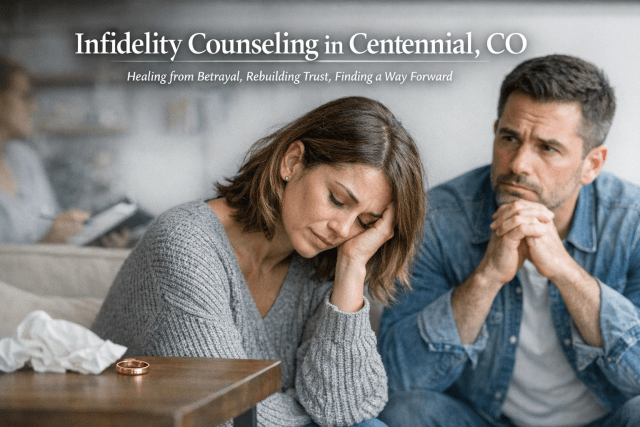
How Infidelity Counseling Helps You Heal
Healing after an affair is possible. However, it requires more than time—it requires a clear and structured process.
Through infidelity counseling in Centennial, CO, you will:
• Slow down the emotional intensity of the situation
• Understand the impact of betrayal on both partners
• Create space for honesty, accountability, and repair
• Improve communication and emotional safety
• Begin rebuilding trust step by step
As a result, many couples move out of survival mode and into a more grounded, intentional relationship.
My Approach to Infidelity Counseling in Centennial, CO
I provide a structured and compassionate approach to affair recovery. Rather than staying stuck in blame or confusion, we focus on clear steps that support healing.
The process includes:
• Stabilizing the relationship after the crisis
• Understanding the impact of betrayal
• Supporting accountability and emotional repair
• Rebuilding communication and trust
• Creating clarity about the future of the relationship
Throughout this process, you’ll be supported in a way that feels grounded, direct, and respectful.
FAQs About Infidelity Counseling in Centennial, CO
Can a relationship recover after an affair?
Yes. With the right support and structure, many couples rebuild trust and create stronger relationships.
Do you help with emotional affairs?
Yes. In fact, emotional affairs can be just as painful and damaging as physical ones.
How long does infidelity recovery take?
Every couple is different. However, consistent therapy helps create steady progress over time.
You Don’t Have to Navigate This Alone
Infidelity can feel overwhelming. However, you don’t have to figure it out by yourself.
Private, Confidential and judgement-free support